Your pool LOOKS fine. But it’s really not.
A pool that looks crystal blue in a listing photo can still have massive structural cracks hiding behind the liner. Without a professional look, you are basically gambling with your bank account.
Read this blog to learn the safety red flags to look for and how to use the findings to save money before you sign the final papers.
Why Your Standard Home Inspection Isn’t Enough
Most people assume their regular home inspector will check the pool as part of the deal. That is usually not how it works.
A standard inspector might glance at the pool to see if it holds water, but they rarely test the specialized equipment. You need a specific swimming pool inspection to look at the pumps, heaters, and salt systems.
This specialized process ensures that the guts of the pool are actually functioning. It is about more than just aesthetics; it is about mechanical reliability.
Safety Is Always the Number One Priority
The very first thing an inspector looks at isn’t the water; it is the safety gear around it. In the United States, pool safety is a massive legal and insurance issue.
The inspector will check your fences, gates, and latches to ensure they comply with local codes. They want to see that a child cannot accidentally wander into the water.
Also, remember, codes change over time, and what was okay ten years ago might be a liability today. So, having a professional who knows the latest codes is the right approach.
A Lesson from the Virginia Graeme Baker Act
The importance of safety checks became a national focus after a tragic incident involving the granddaughter of former Secretary of State James Baker.
Seven-year-old Virginia Graeme Baker died due to suction entrapment from a faulty hot tub drain. This tragedy led to the Virginia Graeme Baker Pool and Spa Safety Act, which mandates the use of specific drain covers to prevent accidents. A modern swimming pool inspection checks for these specialized covers every single time.
If an inspector finds an old-style flat drain cover, it is an immediate safety fail. This isn’t just a suggestion; it is a vital step to prevent life-threatening accidents.
Checking the Mechanical Heart of the Pool
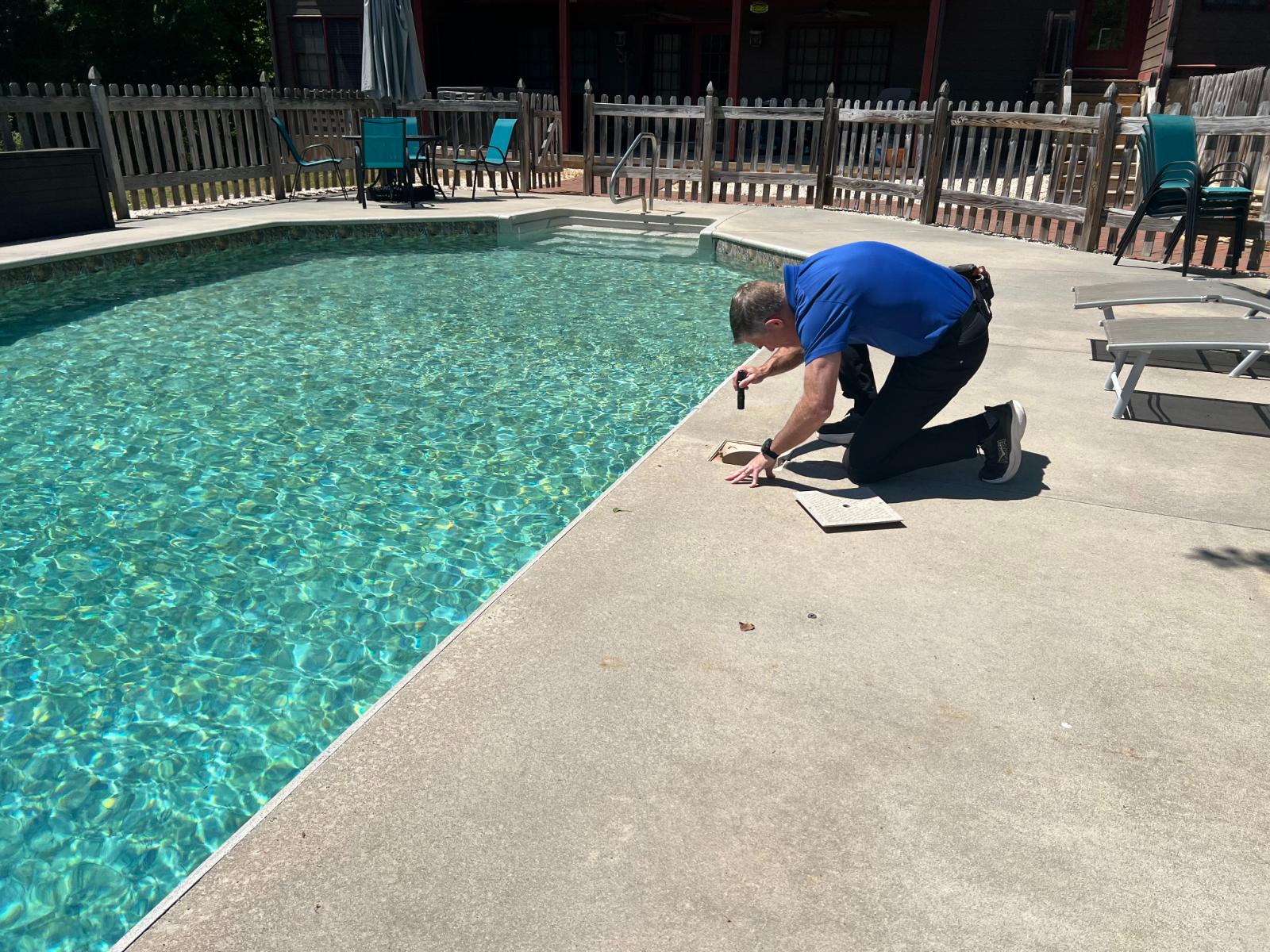
Once the safety perimeter is clear, the inspector moves to the equipment pad. This is where the pump, filter, and heater live.
They will turn everything on to listen for weird noises. A loud, grinding pump usually means the bearings are shot, and a replacement is on the way.
The inspector also checks for leaks around the filter housing and the valves. Even a tiny drip can lead to a massive loss of chemicals and water over time.
The Swimming Pool Inspection Checklist for Surfaces
The pool’s structure is the most expensive part to fix. The inspector will look closely at the tile, the coping, and the interior finish.
If you see spiderweb cracks, it might just be cosmetic, but deep cracks are a sign of structural shifting.
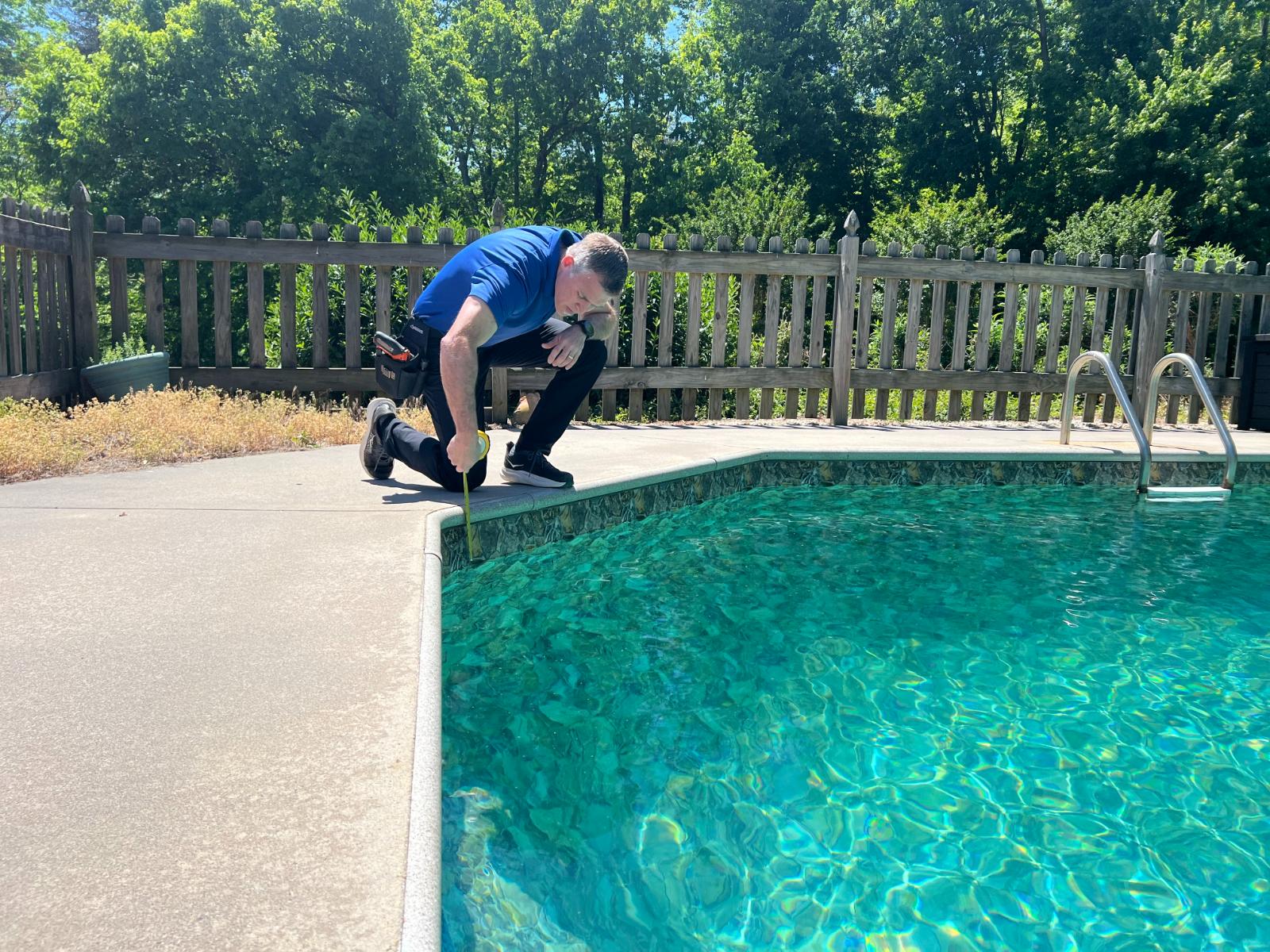
For vinyl liner pools, they look for wrinkles or tears. A liner that is pulling away from the top edge is a sign that it is reaching the end of its life.
The American Red Cross provides tips and guidelines on how to maintain a pool’s integrity and maintain its safety.
Plumbing and Pressure Testing
The pipes that run underground are the hardest things to evaluate. Most inspectors will do a visual check of all visible plumbing for leaks or signs of repair.
If they see air bubbles blowing out of the return jets, it usually indicates a leak in the suction line. This is a red flag that requires a deeper pressure test.
Fixing an underground leak often means digging up the concrete deck. That is a mess you definitely want the seller to pay for.
Evaluating the Electrical Components
Water and electricity are a dangerous mix, so the inspector checks all the wiring. They look at the pool lights to ensure they are properly sealed and grounded.
They also check for a Ground-Fault Circuit Interrupter (GFCI) on all pool equipment. This device shuts off the power instantly if it detects a short circuit.
If the pool light is filled with water, it poses a major shock hazard. An inspector will flag this as an urgent repair immediately.
Why the Pool Deck Matters Too
The area surrounding the water is just as important as the water itself. The inspector checks the deck for trip hazards or soft spots.
If the concrete is sinking in one corner, it might mean there is a hidden leak underneath washing away the soil. This is a classic sign of a larger problem.
They also check the mastic, which is the stretchy caulk between the pool and the deck. If that seal is broken, water can get behind the pool wall and cause it to collapse over time.
What Happens After the Inspection
Once the walk-through is done, you will get a detailed report. This isn’t just a list of problems; it is a roadmap for your investment.
You can use this report to request repairs or a credit at closing. If the heater is broken, you shouldn’t have to pay full price for the house.
A swimming pool inspection gives you the leverage you need to make a fair deal. It turns “I think it works” into “I know it works.”
Protecting Your Home with Professional Inspections
If you are about to buy a home with a pool, do not leave the details to chance.
Reach out to Assurance Home Inspections for a thorough look at your backyard investment.
We are a professional home inspection company specializing in uncovering hidden flaws others overlook. We provide clear, honest reports so you can move into your new home with total confidence.