You have just signed the deal for your dream house. The inspector waves the nod. You’re popping the champagne. Months later, a mere test reveals that radon is high enough to cause harm, and you did not notice it. How could you? Radon is invisible, odorless, and colorless. Not only is that a bummer, but it is risky.
That is why radon testing for home inspection isn’t a checkbox you skip. It’s a lifesaver. Let’s cover it in this blog so you can gain a deeper understanding.
What is Radon and What’s the Big Deal About It
Radon is an odorless and invisible gas that is naturally formed when uranium breaks down underground. It leaks out of soil and rocks, and if your house is built upon such a surface, you are in trouble. Without testing, you can not detect it. It is considered to be the second-most common cause of lung cancer in the U.S, and around 21,000 people die annually due to it. Almost one in every 15 households contains unsafe radon levels. The EPA has designated radon levels of 4 picocuries per liter (pCi/L) as safe.
When the concentration of radon exceeds 4 pCi/L, the EPA recommends corrective action. Even the lower thresholds are risky. At 2 pCi/L, 4 out of 1,000 non-smokers may develop lung cancer during their lifetime; at 4 pCi/L, this number increases to 7 out of 1,000 individuals.
Is a Radon Test Required when Buying a Home
Radon testing determines whether your property deal goes through in many states. According to the EPA, testing is recommended when purchasing or selling a home. Certain jurisdictions require or, at the very least, mandate full disclosure of past results.
Should I Get a Radon Test With a Home Inspection
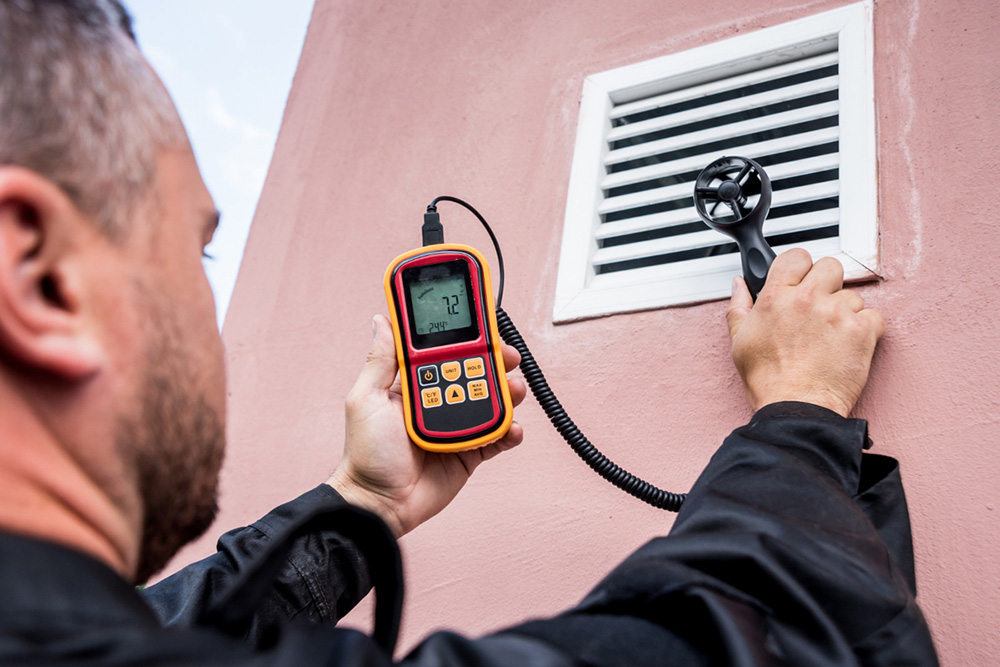
Absolutely. Radon testing for home inspection fits right in. An immediate or long-term test gives a picture of the prevailing levels. The variations in radon occur every hour, in every home, and in neighborhoods. Therefore, the test done by your neighbor or a previous owner would be of no use.
Real Stories That Hit Home
These aren’t hypothetical scenarios. Scary situations have occurred with real people all over the U.S. when radon testing was not done:
Lisa and her husband had lived in their new dream house for a year, but after that, they discovered that the basement had toxic levels of radon. “When I first learned the results, I was horrified that we had been exposing our family,” she said
Jackie, a CDC employee, must have believed that the house they live in was not dangerous in any way. Her father had never tested the same house in thirty-two years. She checked and found 18 pCi/L on one side of her condo and 9 pCi/L on the other.
One day, Kerri Robinson woke up feeling nauseous, and was diagnosed with lung cancer that had spread into her brain as well. Her physician inquired whether she had checked her house, and it happened to have a 31.3 pCi/L radon level, equivalent to smoking three packs a day, as one specialist put it.
A Waynesboro, Virginia, couple found the radon levels in their Amazon-bought radon kit to be in the 20s to 30s pCi/L. They needed to install more than one layer of mitigation system, first a passive system, and then an active fan system.
These stories prove that radon testing for home inspection isn’t just paperwork; it’s saving lives.
Data You Can Trust
Radon testing is worth it due to the following:
- According to the EPA, it is estimated that 7 million U.S. homes have elevated radon levels.
- Mitigation can cost between $700 and $4,000, comparable to the cost of other common home repairs.
- You can reduce radon levels on average by 50% in new homes by adopting simple radon-resistant building methods.
- The use of testing devices is reliable and precise when applied correctly.
- Short-term tests are low-cost and simple. Both DIY kits available in stores and professional tests count.
Do I Need a Radon Test
Yes. Asking “Do I need a radon test?” is the right question. The answer? Refusing a radon test is like refusing to check your brakes before hitting the highway; it’s a risk not worth taking. Radon concentration varies from house to house, even in areas not considered hotspots.
Bottom Line: Is Radon Inspection Worth It
It is well worth inspecting for radon. It is low-cost and simple, and would prevent cancer. It gives you the power to negotiate better, ask for mitigation measures, or simply walk out of the deal. That’s peace of mind that money cannot buy.
Wrap-Up
Placing your health in jeopardy by skipping radon testing is not advisable. It’s better not to roll dice, because there is a free and easy method of verifying the air you and your family will breathe.
Assurance Home Inspections offers a reliable and reputable radon testing experience with quality work performed by friendly professionals. We will take care of testing, interpret your results, plus provide guidance on what to do next in case levels are high. Don’t risk the safety of your family. Schedule your radon testing for home inspection now and move into your new home with confidence.