At a Glance
- Homes built before 1986 often contain lead pipes, lead solder, or corroded galvanized plumbing that leach toxic heavy metals into clear-looking tap water.
- Water quality testing helps detect lead and other contaminants that cannot be identified by sight, smell, or taste.
- Never boil tap water to remove lead; run certified filters (NSF 53 or 58), and consult your local utility about replacing older service lines.
The water flowing from your kitchen tap may look clean, but its appearance alone cannot tell you whether it contains lead or other contaminants.
If your home was built before 1986, its plumbing may contain lead pipes, lead solder, or older brass fixtures. Aging pipes can affect drinking-water quality, depending on the materials, water chemistry, and condition of the plumbing.
Although public water utilities treat and monitor their water supplies, contaminants can enter drinking water as it travels through service lines and household plumbing.
This guide explains how old plumbing affects drinking water safety, which pipe materials present potential risks, and why professional water quality testing is an important step for older properties.
How Does Old Plumbing Threaten Drinking Water Safety
Old plumbing can threaten drinking water safety because corroding pipes and plumbing components may release metals into the water. As water flows across deteriorating surfaces, chemical reactions can release lead, copper, iron, and other substances.
The risk depends on the plumbing materials, water chemistry, temperature, and condition of protective mineral deposits inside the pipes.
The Flint, Michigan, water crisis demonstrated how inadequate corrosion control can allow lead to enter drinking water from aging infrastructure. It also highlighted the importance of water treatment, monitoring, and appropriate maintenance.
Even when a public water system meets applicable requirements, lead can enter water through lead service lines, solder, fixtures, and other plumbing components. Water quality testing helps homeowners determine whether their tap water contains concerning levels of contaminants.
What Types of Pipes Cause Lead Pipe Contamination
Lead service lines, galvanized steel pipes, older copper pipes joined with lead solder, and certain brass fixtures can contribute to lead pipe contamination in residential properties.
Federal law restricted the use of lead-containing plumbing materials in new drinking-water installations and repairs in 1986. However, existing lead pipes and older plumbing components remained in many homes.
Subsequent federal changes strengthened lead-free requirements, leading the U.S. Environmental Protection Agency (EPA) to publish the final regulation, “Use of Lead-Free Pipes, Fittings, Fixtures, Solder, and Flux for Drinking Water,” on September 1, 2020.
Different eras brought different building materials into home construction:
| Pipe material | Common era of use | Potential water hazard |
| Pure lead | Common in older homes, particularly before the 1950s | Lead can leach directly into drinking water |
| Galvanized steel | Common in homes built during the early to mid-20th century | Corrosion releases iron and zinc; lead can accumulate on internal surfaces |
| Copper with lead solder | Particularly relevant in older installations before 1986 | Lead may leach from solder joints |
| Older brass fixtures | Common in older plumbing systems | Some fixtures may release lead into water |
Galvanized steel pipes pose an additional concern when lead contamination has occurred in the plumbing system.
Lead particles can accumulate on galvanized pipe surfaces, particularly where a lead service line is or was present. These deposits may later release lead into the water.
However, the age or appearance of a pipe alone cannot confirm lead pipe contamination. Identifying the materials and arranging appropriate water quality testing are important steps toward understanding the actual risk.
Why Is Water Testing for Lead Essential for Older Homes
Professional water testing for lead is essential when older plumbing materials or other risk factors raise concerns about contamination. Lead cannot be reliably detected through sight, smell, or taste, and a visual inspection cannot determine the amount of lead present in drinking water.
A home inspector may identify older pipes beneath a basement joist or where the water service line enters the property. However, visual checks cannot establish the concentration of lead in the water.
The CDC states that no safe blood lead level has been identified for children. Lead exposure can affect brain development, learning, behavior, and other aspects of health.
Laboratory water testing for lead measures the concentration in the collected sample, typically reported in micrograms per liter or parts per billion. Results help homeowners understand the condition of their water under the sampling conditions.
A single result does not guarantee that water quality will remain unchanged. If lead is detected, homeowners should reduce exposure, contact their water utility or local health department, and determine the appropriate corrective measures.
What Should You Expect from Water Quality Testing
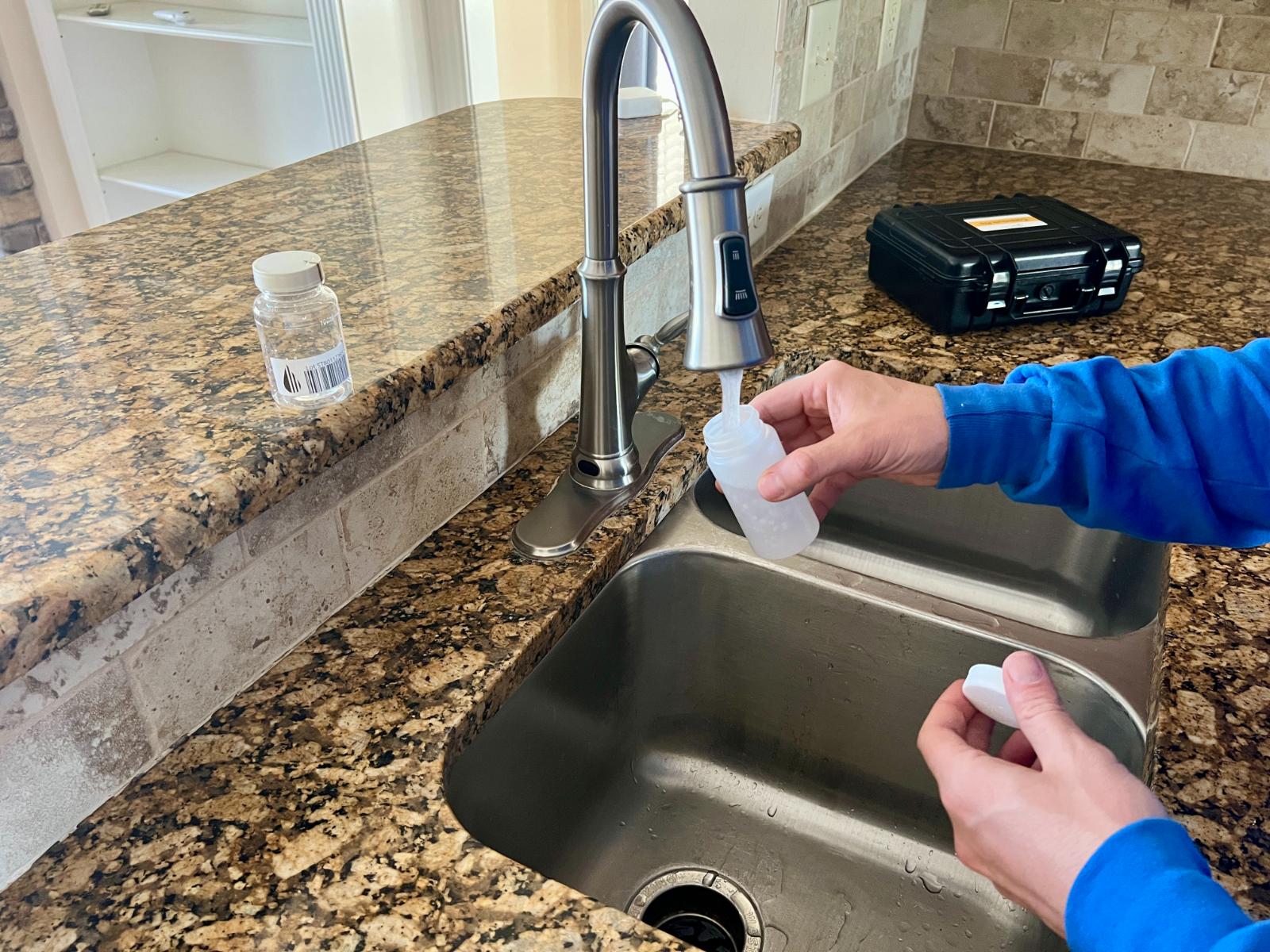
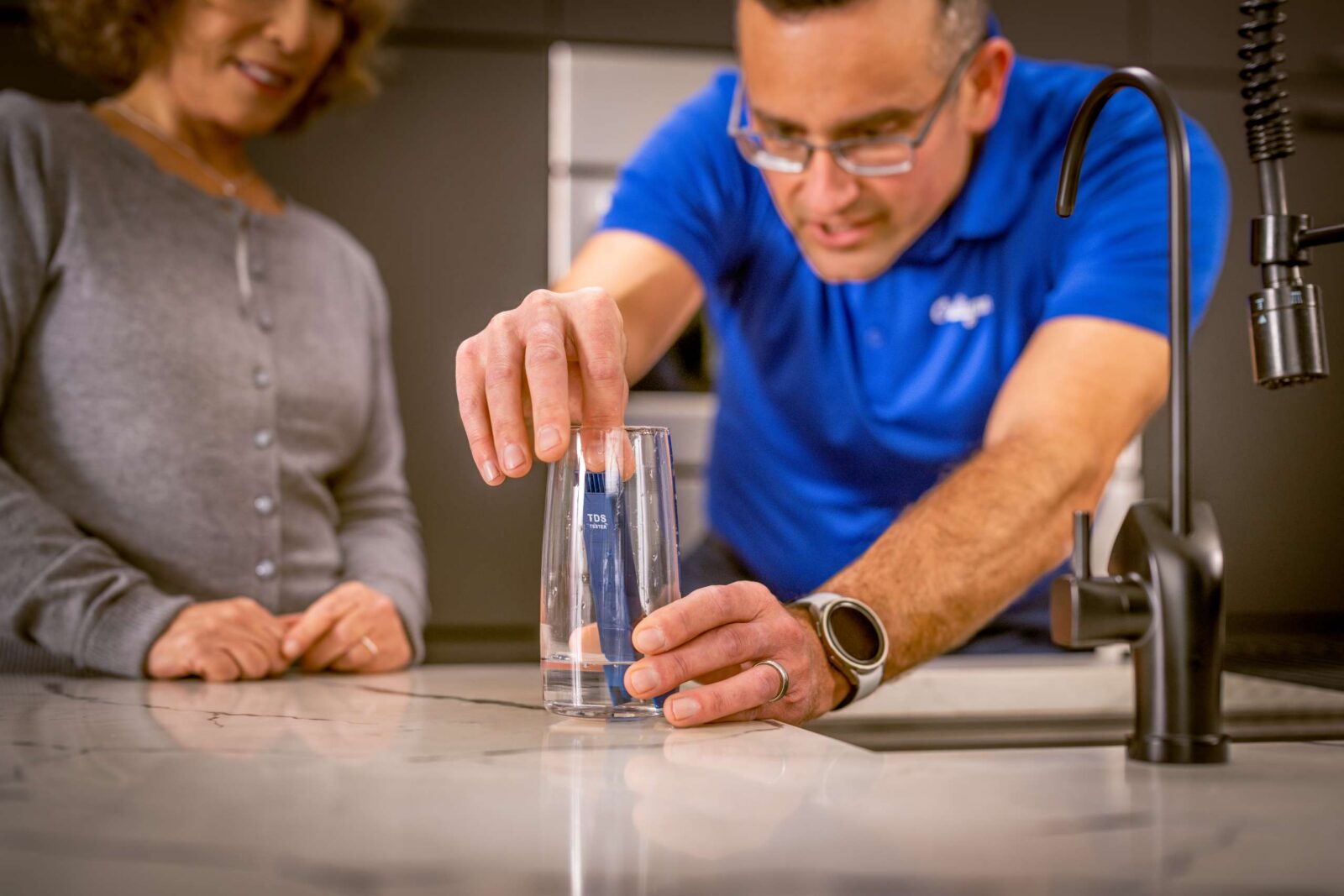
Professional water quality testing collects samples from selected fixtures and sends them to a qualified laboratory for analysis. Depending on the property and concerns, testing may cover lead, copper, nitrates, bacteria, or other relevant contaminants.
The appropriate testing panel depends on whether the home uses municipal water or a private well, the plumbing materials, previous results, and local water-quality concerns.
The process may include two types of samples.
- First, a technician or homeowner collects a first-draw sample after water has remained unused in the plumbing for the period specified by the laboratory, commonly at least six hours. This sample can help identify metals released by faucets, fixtures, and nearby plumbing components.
- Next, a flushed sample may be collected after running the water according to the laboratory’s instructions. Comparing results can help assess how contaminant levels change as stagnant water is cleared.
A flushed sample does not necessarily isolate water from the underground service line. Additional sampling may be necessary to identify the source of contamination.
Choose a qualified laboratory approved or certified by the relevant state or local authority for drinking-water analysis, and follow its collection instructions carefully.
Professional water quality testing provides laboratory data to help homeowners make informed decisions about their drinking water safety. If results are elevated, consult the experts about the next steps.
How Can Homeowners Protect Their Tap Water Right Now
Homeowners can take practical steps to reduce potential exposure while investigating plumbing concerns. However, these measures do not replace water quality testing or appropriate repairs.
- Avoid using hot water. Hot water can contain higher lead concentrations. Don’t use it when preparing food and infant formula.
- Flush water according to local guidance. After water has been sitting in the plumbing, follow your water utility’s recommendations. The required flushing time varies by home and service-line configuration.
- Clean faucet aerators regularly. Sediment and particles can accumulate in these small screens. Follow suitable cleaning instructions and avoid disturbing suspected lead-containing components.
- Do not boil water to remove lead. Boiling does not eliminate lead or other dissolved heavy metals. Evaporation can increase their concentration.
- Choose an appropriately certified filter. Look for a product specifically certified for lead reduction under NSF/ANSI 53 or a suitable reverse-osmosis system certified under NSF/ANSI 58. Verify the exact product’s claims and replace cartridges as directed.
If you suspect lead contamination, consider using a properly certified lead-reduction filter or another suitable water source while arranging testing and remediation. Contact your water utility to ask about service-line materials, available records, and recommended precautions.
Taking Charge of Your Home Plumbing and Drinking Water Safety
Owning an older home offers architectural character, but its plumbing may require additional attention.
Aging infrastructure does not automatically mean that drinking water is contaminated. However, understanding your plumbing materials and arranging water quality testing when appropriate can help identify potential problems before they go unaddressed.
Check the visible pipes where safely accessible, review available service-line records, and consult a qualified plumber if you suspect lead-containing materials. Consider testing after relevant plumbing work, when previous results indicate a concern, or when local conditions warrant it.
If lead is confirmed, discuss suitable replacement or remediation options with your water utility and a qualified professional. Do not disturb suspected lead pipes yourself, and consult the utility before undertaking service-line work.
Your plumbing connects directly to your household’s drinking water. Treat its condition and the quality of your tap water as important parts of home maintenance.
Protect Your Home and Ensure Drinking Water Safety
Older plumbing does not automatically mean your drinking water is contaminated, but understanding potential risks is an important first step.
Assurance Home Inspections helps helping homeowners assess plumbing concerns and understand the next steps for evaluating water quality. Contact the team to learn about available inspection and water-testing services, identify potential issues, and plan appropriate follow-up.
Schedule an assessment with us to make informed decisions about your home’s plumbing and drinking water safety.
FAQs
1- How often should I schedule water quality testing?
Testing frequency depends on your plumbing materials, previous results, local conditions, and any recent plumbing work. Private-well owners should generally test annually for bacteria, nitrates, and other recommended indicators, following local guidance.
2- Can boiling tap water eliminate lead pipe contamination?
No. Boiling water does not remove lead or other dissolved heavy metals. As water evaporates, these contaminants can become more concentrated. If you suspect lead pipe contamination, use an appropriately certified lead-reduction filter.
3- How do I identify a lead pipe in my basement?
If the water service line is safely accessible, lead pipes may appear dull gray, feel relatively soft, and reveal a shiny silver surface when gently scratched. However, other materials can look similar, so appearance alone is not conclusive. Do not cut, puncture, or disturb a suspected lead pipe.